
Friday morning. I scramble to get my laptop, files, pens, and notebook. I’m standing in for a sick colleague at the Children’s court for two matters. It will probably take up my entire day, but these kinds of cases can’t be postponed, so I feel compelled to step in. I fetch the reports from her office and quickly scan through the recommendations before I leave to pick up the children.
“Reunification.” That word brings relief. While these cases are rare, they are always the most encouraging and fulfilling.
The children have never met me, so they are quiet at first. It’s quite a long drive to court in early morning traffic, so we eventually start talking. By the time we reach the court, I know all about their school subjects, the activities in the children’s home, their fears and questions about going to the court…
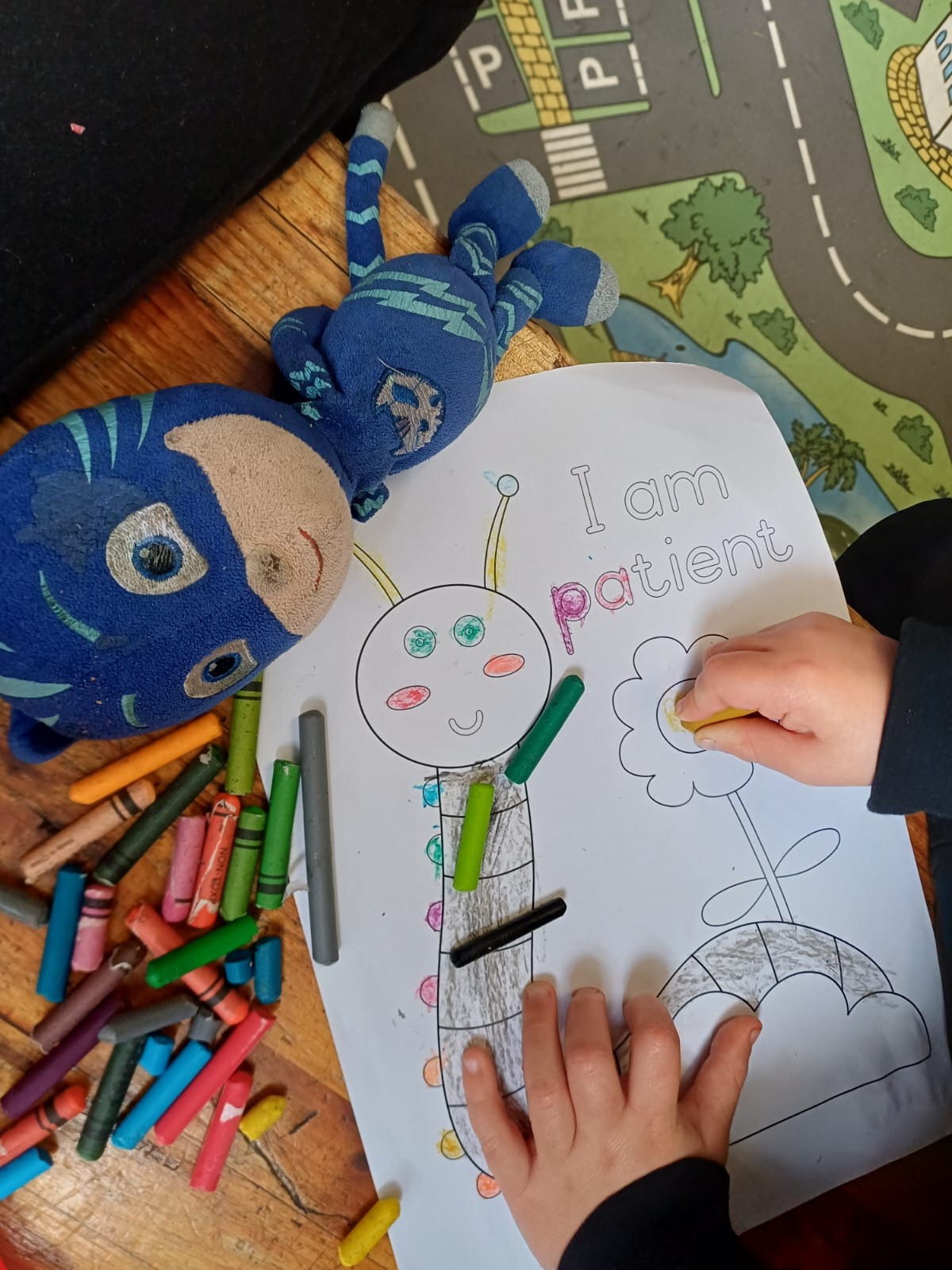
We arrive and wait, and wait. And wait. After at least an hour of waiting, I notice the crayons and pages. The boy, about five years old, is hesitant, but when I start colouring, he quickly joins in. We have a bit of a debate about which colours to use, and he insists that a sunflower is yellow on the inside. It took me a while to notice the significance of the words above the picture on the colouring page.
I think of the time these children spent living in a Children’s Home, and how they must have felt waiting there over weekends, holidays, ordinary days, and the months of not being with their family. I think of the wishes, disappointments, anger, sadness, loss, and the unfairness of it all. Then I find myself not thinking anymore, because those kind of thoughts end nowhere, and in this field you can’t really afford to think them.
If you really want to survive child protection, you must learn to abide in the liminal space between feeling deeply and having compassion, and understanding that your feelings and compassion cannot save the world.
“I am patient.”
After waiting a few hours, the children’s mother arrives in the waiting room. Suddenly, our picture is forgotten, and replaced by a person. Eventually, it is our turn to appear, and after presenting the recommendation, the magistrate agrees with my finding. Reunification.
As we drive back to the Children’s Home for the children to pack up the brief life they had there, I can’t help but think again. I think of the patience it takes to survive when your whole life has been disrupted and displaced. I think of the patience you need to wait on adults, always busy with things too complex for your small brain to understand, rarely patient enough to take the time to explain things to you slowly, until they sink in. And then I find myself so deeply humbled by this little boy and his colouring page.
Am I patient?


